India's real estate market entered 2026 with strong momentum. Residential demand remained healthy, luxury housing continued expanding, and developers across major cities were aggressively launching new projects.
But over the past few months, a different force has begun influencing the sector — geopolitics.
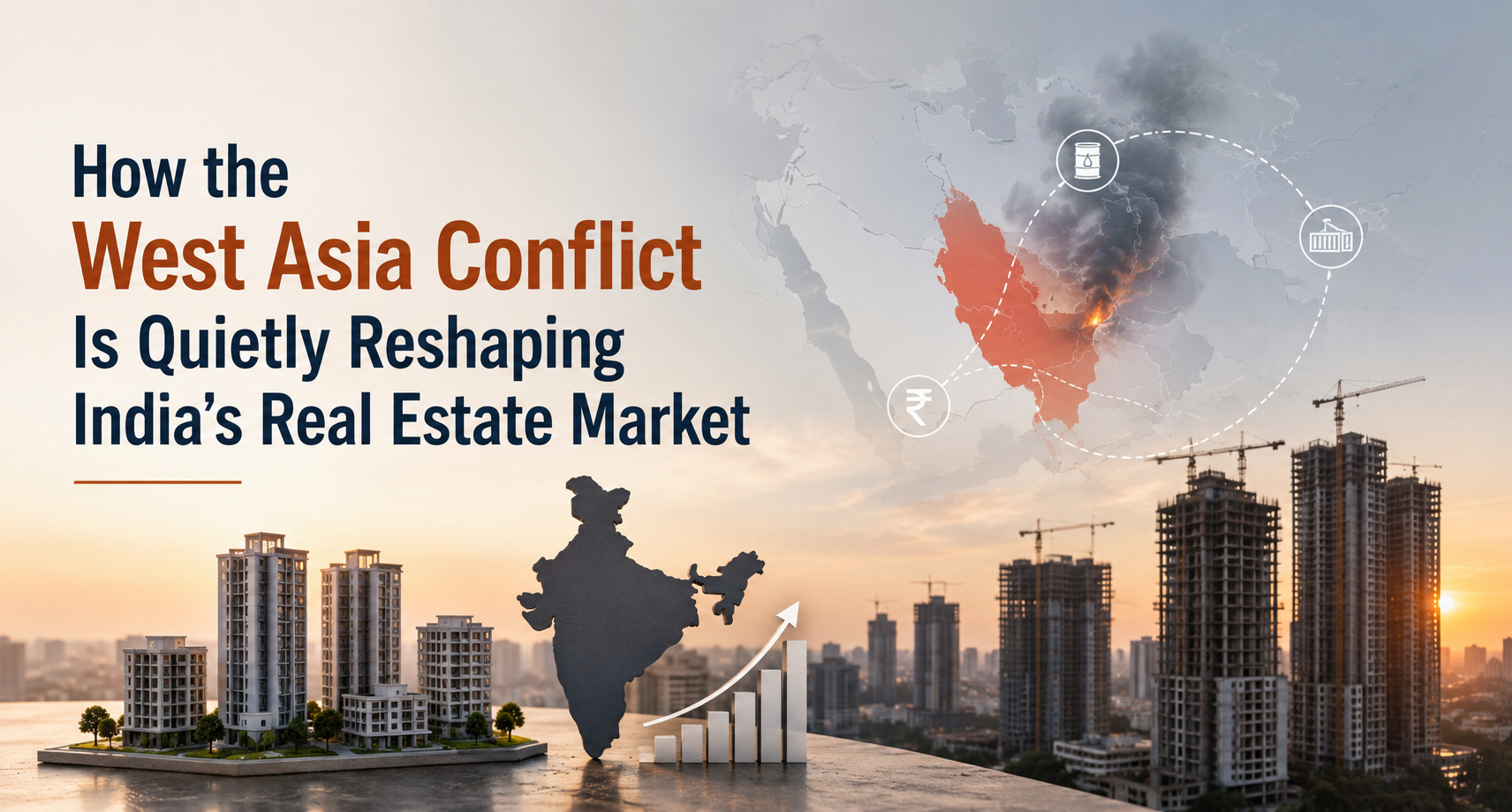
The ongoing conflict in West Asia is now impacting India's construction ecosystem through rising fuel costs, supply chain disruptions, shipping delays, and sharp increases in raw material prices. What initially appeared to be a distant geopolitical issue is now creating real challenges for developers, contractors, suppliers, and homebuyers across India.
Industry bodies such as CREDAI and NAREDCO have warned that if the conflict continues for a prolonged period, construction costs and home prices could rise meaningfully in 2026.
Developers Are Seeking 3–6 Month Project Extensions
One of the biggest signs of stress within the sector is the growing demand for regulatory relief.
CREDAI has reportedly requested authorities to consider the current situation as a force majeure event and grant blanket project deadline extensions of 3–6 months for ongoing developments, citing severe disruptions in material supply chains and labour availability.
For the real estate industry, time delays are not minor operational issues. Delayed projects increase interest costs, affect cash flows, strain buyer confidence, and create additional financial pressure on developers already dealing with elevated land and financing costs.
Construction Costs Are Rising Again
The larger concern is inflation in construction inputs. Industry reports suggest that India's real estate construction costs could rise by 3–5% during 2026 due to higher prices of steel, aluminium, copper, cement, fuel, and labour.
Specific categories seeing sharper increases include:
- Aluminium formwork prices, which have surged significantly
- Copper prices, which have seen steep increases
- Reinforced concrete and electrical components
- Imported construction materials facing delays and freight escalation
The West Asia crisis is also impacting logistics and shipping routes, further increasing procurement uncertainty.
What This Means for Homebuyers
For buyers, the biggest implication is pricing pressure.
When developers face higher construction costs, those increases are eventually reflected in apartment pricing — especially in projects launched during periods of elevated input inflation.
Mid-income and affordable housing segments may feel the greatest pressure because developers in these categories operate on thinner margins compared to luxury housing projects.
If material inflation persists through 2026:
- Apartment prices may continue rising
- Project delivery timelines may extend
- Smaller developers could face liquidity stress
- New launches may slow down in certain markets
The impact may also vary city by city depending on supply conditions, inventory levels, and developer strength.
A Structural Shift for Indian Real Estate
The Indian real estate sector is entering a phase where global geopolitical events increasingly influence local housing economics.
Oil prices now affect transportation and logistics. Global shipping disruptions affect material availability. Commodity inflation affects construction costs. And construction inflation eventually affects housing affordability.
Developers that may outperform in this environment are likely those with:
- Strong balance sheets
- Faster execution capability
- Better procurement systems
- Lower debt exposure
- Efficient inventory management
For the industry, 2026 may become a reminder that real estate is no longer shaped only by local demand and interest rates — but also by global economic and geopolitical events.