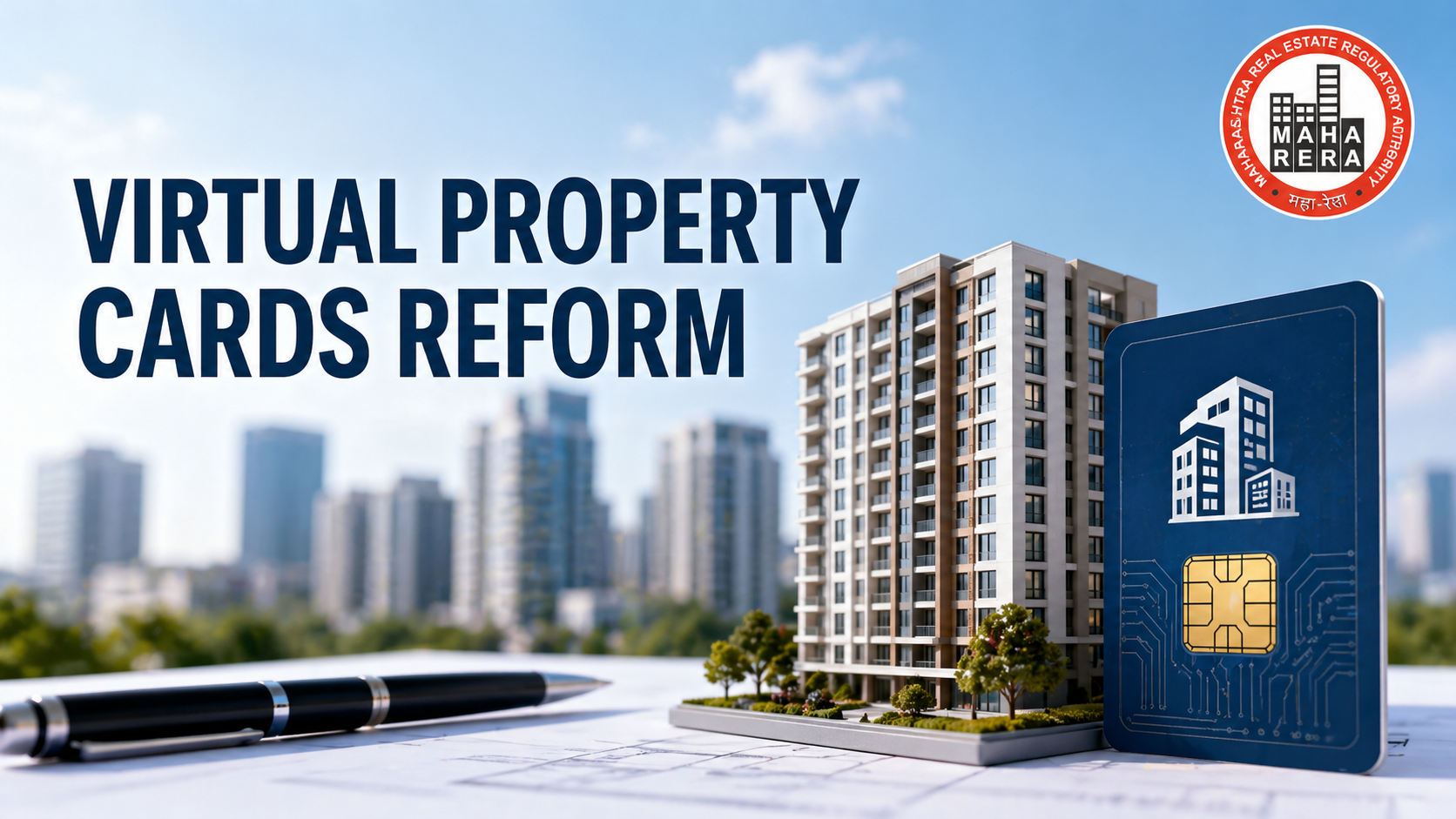
A structural change in documentation often creates the biggest change in real estate efficiency.
Maharashtra's introduction of Virtual (Vertical) Property Cards is one such reform—designed to simplify ownership verification, speed up transactions, and reduce friction in everyday property processes like bank loans, inheritance, and dispute resolution.
What Exactly Is a Virtual Property Card?
A Virtual Property Card (VPC) is a government-issued legal document that links an individual flat directly to its share in the underlying land. In simple terms, it gives each apartment its own clear identity in official land records.
Historically, land records primarily tracked plots rather than individual units in multi-storey buildings. This created ambiguity in ownership documentation. The new system addresses that gap by connecting apartment ownership directly to land ownership records.
Why This Matters for Buyers, Owners, and the Market
The reform targets some of the most common pain points in property transactions:
1) Faster Home Loan Approvals
Banks rely heavily on clear ownership records. When documentation is standardized and digitally verified, loan processing becomes faster and more predictable.
2) Simpler Inheritance and Transfer Processes
Property succession often gets delayed due to unclear ownership structures. A standardized property card reduces legal uncertainty during ownership transfer.
3) Reduced Legal Disputes
Clear documentation of ownership share in land can significantly reduce disputes related to title and inheritance.
These changes may sound administrative, but they directly influence transaction speed, financing access, and market confidence.
A Shift Toward Modern Property Governance
This reform reflects a broader transition in India's real estate ecosystem—from fragmented paperwork to structured, digital property governance.
In practical terms, it signals:
- Greater transparency in ownership records
- Improved legal clarity for apartment buyers
- Faster property transactions
- Increased confidence among lenders and investors
The property card has long been a critical urban land record in Maharashtra, serving as the official proof of ownership in city survey areas.
The new vertical version modernizes that system for urban housing.
What This Means for the Future of Urban Real Estate
Reforms that reduce documentation complexity typically lead to measurable improvements in market efficiency. Over time, such changes can:
- Shorten transaction timelines
- Improve mortgage accessibility
- Encourage formalization of property ownership
- Strengthen investor confidence
In other words, documentation reform is not just administrative—it is economic infrastructure.
The Bottom Line
Maharashtra's Virtual Property Cards are less about technology and more about trust.
By clearly linking apartments to land ownership, the state is simplifying one of the most complex parts of real estate—documentation.
For buyers, lenders, developers, and policymakers, this reform represents a foundational shift toward faster, safer, and more transparent property transactions.